
 DE
DE Inhalt
Human Medicine is one of the most popular degree programmes in Germany, but at the same time it is also one of the most difficult to access. There is hardly a numerus clausus at any private university, but a degree programme in Human Medicine with the final goal of a state examination is currently offered at only 5 private universities in Germany. I will introduce you to all 5 universities and study programmes in the following.
In addition, however, there is a very broad range of degree programmes in the health sciences offered at private universities from Hamburg to Munich. For example: the Bachelor's degree programmes in Physician Assistance, which are very demanding and train students for assisting jobs in medicine. I present these and other study programmes in the field of medicine here.
Overview of all Courses
We have a total of 46 courses in the field of Medicine. The first 30 top courses are displayed. Use the filter function or our search to discover more courses in the field.

- Distance learning program
- Bachelor of Engineering (B.Eng.)
- 6 Semester
- online
- German
- Technology in Healthcare, Fundamentals of Physics, Introduction to Scientific Work, Basics of Chemistry, Medicine for Non-Medical Practitioners I, Basics of Mathematics, Collaborative Work, Electrical…
The Bachelor's degree program in Medical Technology in distance learning teaches students the necessary knowledge to develop and operate medical devices and systems. Various subject areas are covered, such as Biology, Physics, Computer Science, and Electrical Engineering. The focus of the program is on the application of technical concepts in the medical field. Students learn how to use innovative technologies for the diagnosis, therapy, and rehabilitation of patients. The program is very practice-oriented and includes projects and internships in companies. Graduates can work in various areas such as the medical technology industry, hospitals, or research institutes.

- Distance learning program
- Bachelor of Science (B.Sc.)
- 6 Semester
- online
- German
- Anatomy and Physiology, Introduction to Empirical Scientific Work and Research, Basic Natural Sciences of Medicine, Introduction to Clinical Medicine, Clinical History Taking and Examination, Practice…
The Bachelor's program Physician Assistant at IU International University provides practical knowledge in patient care. As academically trained assistants, graduates support doctors in the medical care of patients. They work autonomously in various medical fields and contribute to improving patient care. The program includes subjects such as anatomy, diagnostics, therapy, and emergency medicine, teaching vital skills like communicating with patients and coordinating treatment.
Human Medicine
Witten/Herdecke University
Medical Economics & Digital Management
RFH – University of Applied Science
Medical Professions
DIPLOMA University of Applied Sciences
Dentistry, Oral and Maxillofacial Medicine
Witten/Herdecke University
Cardiovascular Perfusion
Steinbeis University
Physician Assistance
Steinbeis University
Molecular Biomedicine
RFH – University of Applied Science
Human Medicine
Brandenburg Medical School Theodor Fontane
Physician Assistance
Döpfer University of Applied Sciences
Physician Assistance
Fliedner University of Applied Sciences Dusseldorf
Human Medicine
Medical School Hamburg
Digital Health
IB University of Health and Social Sciences
Naturopathy and complementary medicine
DIPLOMA University of Applied Sciences
Periodontology
Steinbeis University
International Emergency and Disaster Relief
Akkon University of Human Sciences
Oral Implantology
Steinbeis University
Periodontics and Implant Therapy
Dresden International University
Clinical Research
Dresden International University
Physician Assistant
Medical School Berlin
Applied Health and Therapeutic Sciences
DIPLOMA University of Applied Sciences
State examination: Study Human Medicine privately without NC
You can currently study Human Medicine with a final state examination at five private universities in Germany. The courses cost between just under 60,000 euros and 125,000 euros, although some of the universities also offer socially acceptable financing models.
Here is an overview of the five medical degree programmes at private universities:
| Course | University | Study site | Duration | Fees | |
|---|---|---|---|---|---|
| Human Medicine, Staatsexamen On-campus program | Brandenburg Medical School Theodor Fontane | Brandenburg/Havel, Neuruppin | 12 Semester | from 125000 € total | |
| Human Medicine, Staatsexamen On-campus program | Witten/Herdecke University | Witten | 12 Semester | from 62880 € total | |
| Human Medicine, Staatsexamen On-campus program | Medical School Hamburg | Hamburg | 12 Semester | from 94500 € total | |
| Human Medicine, Staatsexamen On-campus program | Health and Medical University | Potsdam or Erfurt | 12 Semester | from 94500 € total | |
| Human Medicine, Staatsexamen On-campus program | Medical School Berlin | Berlin | 13 Semester | from 93000 € total |
In the following, I will introduce you to the individual degree programmes in more detail.
Witten/Herdecke University
 Witten/Herdecke University was founded in 1982 as a non-profit limited company and is the oldest private university in Germany. The university is located in Witten in North Rhine-Westphalia.
In the winter semester 2019/2020, a total of 2,617 students were enrolled at Witten University. The degree programme in Human Medicine at Witten University received state recognition in 2000 and is subject to the licensing regulations for doctors. A maximum of 84 students are admitted per semester.
As a university, Witten University is entitled to award doctorates. In addition, the university's Faculty of Health may replace the first of the three state examinations in the Human Medicine degree programme with internal equivalency examinations.
The study programme is divided into the 3 usual phases:
- the 1st study phase comprises the 1st and 2nd study year
- the 2nd study phase comprises the 3rd, 4th and 5th study year
- the 3rd study phase in the 6th year of study consists of the practical year ("PY").
The medical degree programme at Witten University is NC-free and lasts 12.5 semesters. The general university entrance qualification, i.e. the Abitur or baccalaureate, is required for the application. Furthermore, applicants must have completed a 6-month nursing internship by the time they start their studies. In addition, applicants write a letter of motivation. Finally, applicants may be invited to a personal selection day in Witten.
As a non-profit limited company, Witten University acts in a non-profit manner and helps its students finance their studies through three different payment models. Students can choose to pay their fees monthly in the amount of 951 euros. Alternatively, the contributions can be repaid over a period of 10 years after graduation, depending on income.
Brandenburg Medical School Theodor Fontane
 The Brandenburg Medical School is a university with municipal and non-profit sponsorship. The university operates 2 campuses, one in Brandenburg an der Havel and one in Neuruppin, on the grounds of the Ruppiner Kliniken in Fehrbelliner Straße 38. The university was founded in 2014. In WS 2019/2020, a total of 444 students were enrolled at MHB.
The degree programme in Human Medicine at the MHB lasts a total of 12.5 semesters and follows the concept of personal medicine, i.e. attempts to integrate biomedical as well as psychosocial and sociocultural aspects in diagnostics and therapy as well as in the formulation of aetiopathogenesis of disease patterns.
The degree programme is NC-free. 48 courses are offered per semester. A university entrance qualification is required for admission. Students are selected according to personal criteria, especially motivation, practical experience and personality.
In addition, applicants must provide evidence of a 6-month internship before entering the degree programme, at least three months of which must be in nursing (MHB internship); the remaining months can be completed in nursing, in outpatient medical care as well as in a social institution or in a research institution as well as in other professional fields related to medicine. Training periods can be credited.
The study programme costs a total of 125,000 euros.
MSB Medical School Berlin
 The Medical School Berlin is a private, state-recognised university based in Berlin and part of a university network with MSH and BSP. The MSB was founded in 2012, and a total of 1,650 students were enrolled at the university in the winter semester 2019/2020. The Faculty of Medicine and the Faculty of Human Sciences have the status of a scientific university and are equivalent to a university.
The full-time study programme lasts 12.5 semesters and is divided into 3 study sections. With the 1st study stage, the pre-clinic, students complete the 1st part of the medical examination. The 2nd study stage, the clinical study stage, comprises a further 6 semesters. Subsequently, students complete the practical year in the 3rd study stage.
The general university entrance qualification is a prerequisite for admission. In addition, applicants undergo a selection procedure.
The tuition fees for the 1st and 2nd stage are 90,000 euros, payable in 60 equal monthly instalments of 1,500 euros each. The fees for the third stage of the programme amount to 4,500 euros, payable in 15 equal monthly instalments of 300 euros each.
The programme is run in cooperation with the Helios Klinikum Berlin-Buch.
MSH Medical School Hamburg
 MSH Medical School Hamburg is a private, state-recognised university based in Hamburg. The MSH was founded in 2009, and a total of 3,023 students were enrolled at the university in the winter semester 2019/2020. The Faculty of Medicine and the Faculty of Human Sciences have the status of a scientific university and are equivalent to a university.
The full-time study programme lasts 12.5 semesters and is divided into 3 study sections. With the 1st study stage, the pre-clinic, students complete the 1st part of the medical examination. The 2nd study stage, the clinical study stage, comprises a further 6 semesters. Subsequently, students complete the practical year in the 3rd study stage.
The general university entrance qualification is a prerequisite for admission. In addition, applicants undergo a selection procedure.
The tuition fees for the 1st and 2nd stage are 90,000 euros, payable in 60 equal monthly instalments of 1,500 euros each. For the third stage of studies, 4,500 euros are due, payable in 15 equal monthly instalments of 300 euros each.
Health and Medical University
 The Health and Medical University is a private, state-recognised university based in Erfurt with another campus at the Villa Carlshagen in Potsdam. HMU started teaching in the winter semester 2020/21, making it the youngest of the 5 private universities offering human medicine studies in Germany.
The full-time programme lasts 12.5 semesters and is divided into three study sections. In the first stage, the pre-clinic, students complete the first part of the medical examination. The 2nd study stage, the clinical study stage, comprises a further 6 semesters. Subsequently, students complete the practical year in the 3rd study stage.
The general university entrance qualification is a prerequisite for admission. In addition, applicants undergo a selection procedure.
The tuition fees for the 1st and 2nd stage are 90,000 euros, payable in 60 equal monthly instalments of 1,500 euros each. For the third stage of studies, 4,500 euros are due, payable in 15 equal monthly instalments of 300 euros each.
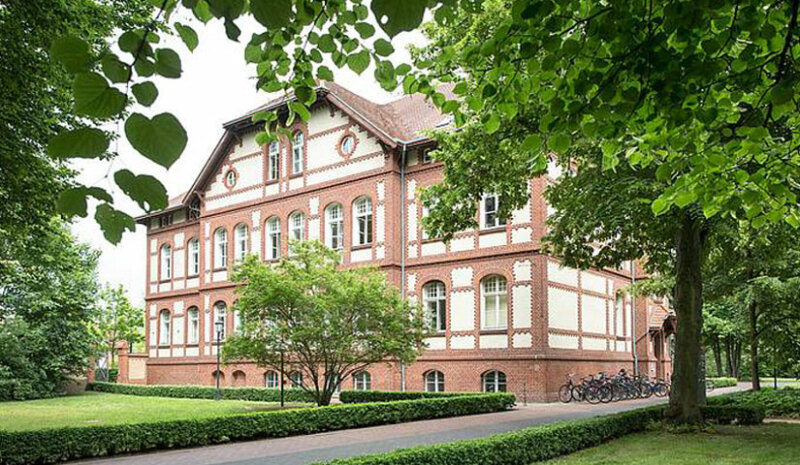
The best private medical schools at a glance
In addition to the five private universities with Human Medicine degree programmes, there are numerous other private universities that offer degree programmes in the health sector. I present the most important universities here in brief portraits.
 Carl Remigius Medical School: The Carl Remigius Medical School is a spin-off department of the Fresenius University of Applied Sciences that bundles a number of health science degree programmes. The institution was founded in 2016 and since then the Bachelor's and Master's degree programmes have been offered at the locations in Frankfurt/Main, Hamburg, Idstein and Munich. Of particular interest: the Bachelor's programme in Physican Assistance, the Bachelor's programme in Midwifery and the Master's programme in Naturopathy.
 Fresenius University of Applied Sciences: Fresenius University of Applied Sciences is one of the largest private universities of applied sciences in Germany, and also one of the oldest - the university was founded in 1848. In winter semester 2019/2020, a total of 12,991 students were enrolled in one of the numerous degree programmes. For example, courses are offered at the interface of biology and medicine, such as the Bachelor of Biomedical Sciences. The university is located in Idstein, but many degree programmes are offered at several locations in Germany, for example in Frankfurt, Munich, Cologne and Berlin.
Witten/Herdecke University: Witten/Herdecke University was founded in 1982 as a non-profit limited company and is the oldest private university in Germany. The university is located in Witten in North Rhine-Westphalia. In the winter semester 2019/2020, a total of 2,617 students were enrolled at the university. The university offers not only a degree programme in Human Medicine, but also a degree programme in Dental Medicine.
 RFH – University of Applied Science: The RFH Cologne is a private, state-recognised university of applied sciences based in Cologne. The university was founded in 1958, and in the winter semester 2019/2020 a total of 6,203 students were enrolled at the university. The university offers interesting degree programmes in the field of health, such as the Bachelor of Molecular Biomedicine.
Brandenburg Medical School Theodor Fontane: The Brandenburg Medical School is a municipally-owned, non-profit university. The university operates 2 campuses, one in Brandenburg an der Havel and one in Neuruppin. The university was founded in 2014, and a total of 444 students were enrolled at MHB in WS 2019/2020. As a university, the university offers a degree programme in Human Medicine.
Medical School Berlin: The Medical School Berlin is a private, state-recognised university of applied sciences based in Berlin. The university was founded in 2012, and in the winter semester 2019/2020, a total of 1,650 students were enrolled at the university. Among other courses, the university also offers a Bachelor in Physician Assistance.
MSH Medical School Hamburg: MSH Medical School Hamburg is a private, state-recognised university based in Hamburg. The MSH was founded in 2009, and a total of 3,023 students were enrolled at the university in the winter semester 2019/2020. The Faculty of Medicine and the Faculty of Human Sciences have the status of a scientific university and are equivalent to a university. Accordingly, MSH is one of the few private universities to offer a degree programme in Human Medicine leading to a state examination.
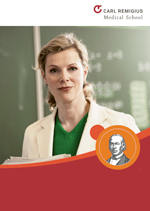

Physican Assistance: Medical studies without NC to become a physician assistant
A Bachelor's or Master's degree programme in Physician Assistance is the alternative to studying medicine for all those who are unable to obtain a place in human medicine due to access restrictions.
Physician assistants are allowed to independently perform delegable activities that were previously reserved for the doctor. Accordingly, physician assistants are allowed to carry out simple treatments independently and assist doctors during operations, for example.
Private universities predominantly offer Bachelor's degree programmes in Physician Assistance. Example: the B.Sc. Physician Assistance at the Carl Remigius Medical School of the Fresenius University of Applied Sciences, which the university offers in Frankfurt am Main and Hamburg. You complete these modules within 8 semesters of full-time study:
- Semester 1: Introduction to studies, scientific basics, taking medical history and medical psychology /sociology, anatomy I
- Semester 2: Anatomy II and Examination Procedures, Medical Basics /Physiology and Pathophysiology, Legal Basics & Ethics
- Semester 3: Fundamentals of Medical Technology & Diagnostic Procedures, Pharmacological Fundamentals & Toxicology, General and Special Disease Theory in Conservative Medicine - Practical Course I (6 weeks)
- Semester 4: Hygiene, general and special pathology in operative medicine - practical course II (6 weeks)
- Semester 5: Communication, Conversation & Social Skills, Medical Documentation and Information Management, Emergency Management and Rescue - Internship III (2 weeks)
- Semester 6: Project work in conservative medicine - practical course IV (12 weeks), Project work in operative medicine - practical course IV (12 weeks)
- Semester 7: Case and subject-specific medicine - practical course V (16 weeks)
- Semester 8: Quality management, occupational and social medicine, prevention and rehabilitation, Bachelor's examination
Here are the most important degree programmes in Physician Assistance at private universities at a glance:
| Course | University | Study site | Duration | Fees | |
|---|---|---|---|---|---|
| Physician Assistance, Bachelor of Science On-campus program | Carl Remigius Medical School | Frankfurt am Main or Hamburg | 8 Semester | from 30000 € total from 625 € monthly | |
| Physician Assistance, Bachelor of Science On-campus program | FHM University of Applied Sciences | Bamberg, Bielefeld, Düren, Hannover | 6 Semester | from 25020 € total from 695 € monthly | |
| Physician Assistance, Bachelor of Science On-campus program | Döpfer University of Applied Sciences | Cologne, Regensburg and Potsdam | 6 Semester | from 17640 € total from 490 € monthly | |
| Physician Assistance, Bachelor of Science Part-time program | Steinbeis University | Berlin | 6 Semester | from 18000 € total from 500 € monthly | |
| Physician Assistance, Bachelor of Science On-campus program | Fliedner University of Applied Sciences Dusseldorf | Düsseldorf | 7 Semester | from 20496 € total from 488 € monthly | |
| Physician Assistance, Bachelor of Science Part-time program | European University of Applied Sciences | Berlin, Cologne, Rheine, Rostock | 6 Semester | from 21204 € total from 589 € monthly | |
| Physician Assistance, Master of Science Part-time program | European University of Applied Sciences | Berlin, Cologne, Rostock, Rheine | 4 Semester | from 15600 € total from 650 € monthly | |
| Physician Assistant, Bachelor of Science Distance learning program | IU International University of Applied Sciences | online | 6 Semester | from 15063 € total from 259 € monthly | |
| Physician Assistant, Master of Science Part-time program | Fliedner University of Applied Sciences Dusseldorf | Düsseldorf | 5 Semester | from 11580 € total from 386 € monthly | |
| Physician Assistant, Bachelor of Science On-campus program | Medical School Berlin | Berlin | 6 Semester | from 21240 € total from 590 € monthly | |
| Physician Assistant, Bachelor of Science Part-time program | SRH University of Applied Health Sciences | Gera, Heide | 6 Semester | from 20700 € total from 550 € monthly |
Studying medicine in Germany: The best study cities
Since a degree in Human Medicine is offered at only five private universities, the choice of study cities is correspondingly small. So those who want to study medicine privately in Germany currently have the choice between Hamburg, Potsdam, Witten in North Rhine-Westphalia - or Berlin, with Neuruppin and Brandenburg an der Havel in its vicinity.
However, health science programmes are also offered at private universities in all major cities throughout Germany. Here is a comparison of the most interesting study cities:
| City | Cost of living | Quality of life | Population density | Universities |
|---|---|---|---|---|
| Munich | 66.05 | 176.46 | 4,736 | Carl Remigius Medical School |
| Frankfurt/Main | 58.98 | 173.18 | 3,067 | Carl Remigius Medical School |
| Hamburg | 56.41 | 161.67 | 2,447 | Carl Remigius Medical School, IB University of Health and Social Sciences, MSH Medical School Hamburg |
| Cologne | 53.06 | 158.55 | 2,686 | RFH – University of Applied Science, HSD Döpfer University of Applied Sciences |
| Dusseldorf | 52.56 | 174.02 | 2,860 | Fliedner University of Applied Sciences Dusseldorf |
| Berlin | 54.53 | 160.06 | 4,115 | Steinbeis University, IB University of Health and Social Sciences, Akkon University of Human Sciences |
| Dresden | 47.89 | – | 1,695 | Dresden International University |
| Bremen | 47.20 | – | 1,743 | APOLLON University of Health Care Management |
| Goettingen | – | – | 1,017 | PFH Private University of Applied Sciences |
| Gera | – | – | 612 | SRH University of Applied Health Sciences |

About the Author Christian Wolf
 This provider offers free info materials to download or send. Would you like to be redirected to the provider's website? There you will find much more information about the course.
Study Advice
Questions about the topic? Use our study advisory service, we are happy to help.
or post as a guest
The MSH selection procedure decides on the allocation of study places. We would like to get to know you personally. After you have submitted your written application documents, you can demonstrate your personal aptitude and motivation. The two-stage procedure consists of a written medical test and an individual interview including an integrated case simulation.