Stuttgart, the capital of Baden-Wuerttemberg, is one of the most important and attractive university cities in Germany with more than 60,000 students. The city has a wide range of educational institutions, including several renowned universities and universities of applied sciences, such as the University of Stuttgart, the Stuttgart University of Applied Sciences and the Media University.
In total, there are 11 state universities in and around Stuttgart. However, the large number of private universities also makes a significant contribution to the range of courses on offer, for example through the IU International University of Applied Sciences, the Macromedia University of Applied Sciences and the AKAD University.
Stuttgart offers students many advantages: Good transport connections, a high quality of life and a wide range of options for leisure and recreation. The high number of companies and research institutes also offer excellent opportunities for internships and career entry.
For culture enthusiasts, there are many offerings such as museums, theatres, concerts and festivals. The city of Stuttgart is also known for its automotive industry, which is why a visit to the Porsche or Mercedes-Benz Museum is a highlight for many students. There are also many bars, clubs and restaurants in the city that are affordable for students.
The city offers numerous opportunities for hiking and cycling, as well as many green spaces such as the Schlossgarten or the Höhenpark Killesberg. The Neckar River is also a great place to relax and unwind. The city's numerous swimming pools and thermal baths also invite you to bathe and take a sauna.
Last but not least, Stuttgart also has a wide range of sports facilities. The city is known for its numerous sports clubs and fitness studios, but also for its cycling and running tracks as well as its climbing gyms and bouldering halls.
Stuttgart as a university city in figures. Cost of living is an index of cost of living + rent. A cost of living index of 120 means that living in this city is 20% more expensive than in New York City. Quality of life is the quality of life index, a combination of different indices. Details on the indices can be found at https://de.numbeo.com. Population density in inhabitants per km2
Inhabitants
609,969
Population density
3,021
Cost of living
64.14
Quality of life
170.86
Private universities
8
State universities
11
Church universities
1
Students
63,000
IU International University of Applied Sciences
Die IU International University of Applied Sciences is the largest university in Germany with over 100,000 enrolled students. The university is based in Erfurt in Thuringia, but IU also offers its campus study programmes at other locations throughout Germany.
IU has a branch in Stuttgart, where dual study programmes and campus study programmes are offered. The university also offers more than 100 distance learning programmes that can be studied regardless of location.
The Macromedia University of Applied Sciences (formerly MHMK, University of Media and Communication) is a private, state-recognised university of applied sciences with its headquarters in Stuttgart and further locations in Munich, Frankfurt, Freiburg, Cologne, Hamburg, Leipzig and Berlin.
The university was founded in 2006; in the winter semester 2021/2022, a total of 4818 students were enrolled at the university. In Stuttgart, the university offers degree programmes in management, media, design and psychology.
Premises of the Macromedia University of Applied Sciences in Stuttgart
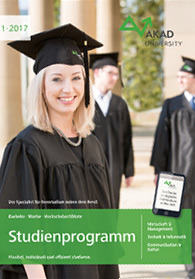
AKAD University of Applied Sciences
The AKAD University of Applied Sciences is a private distance learning university based in Stuttgart with over 30 examination centres throughout Germany. It was founded back in 1959 and currently has around 6000 students. It offers degree programmes in the fields of business and technology as well as communication, health and social affairs.
In addition to Bachelor's and Master's degree programmes, certificate and continuing education programmes can also be completed. The course content is taught via online seminars, self-learning phases and face-to-face events.
Tip: At many institutions, you can request prospects and information materials and in some cases download them immediately. The brochures contain all the information on study content, costs, financing and funding opportunities.
The University of Communication and Design (HfKG) is a private university with its headquarters in Stuttgart and a location in Ulm. The HfKG offers Bachelor's degree programmes in the fields of communication design, corporate communications and communication design.
The university is characterised by its practice-oriented education, where students are involved in projects from the very beginning through close cooperation with companies and organisations. The HfKG emphasises individual support and promotes the creative and innovative development of its students.
The HfKG takes an interdisciplinary approach and combines the fields of design, technology and management. Students have the opportunity to expand their skills in various projects and workshops to prepare for a successful career in the creative and media industries
View of the campus of the University of Communication and Design
media Akademie - Stuttgart University of Applied Sciences
The media Akademie - Stuttgart University of Applied Sciences is a private university with its headquarters in Stuttgart that specialises in the fields of media, film and journalism. The university offers Bachelor's degree programmes in film and animation, journalism and corporate communications as well as a Master's degree programme in film and moving image production.
The media Akademie places great emphasis on practice-oriented learning and offers its students numerous opportunities to gain practical experience and implement projects with companies and other institutions. The academy is very well networked and works closely with various companies, broadcasters and producers to offer its students the best possible preparation for starting their careers.
The media Akademie is characterised by its innovative teaching methods, which include a combination of theory and practice as well as interdisciplinary and project-oriented learning. Students are supervised by experienced lecturers and receive personal support and guidance during their studies.
The VWA University for Professional Education was founded in 2013 and is a private, state-recognised university based in Stuttgart with further locations in Freiburg, Karlsruhe and Ulm. With 360 students, it is one of the smaller universities of applied sciences in Germany.
The VWA specialises in part-time degree programmes and currently offers Bachelor's degree programmes in Business Administration and Industrial Engineering. In its training, the university places great emphasis on immediate applicability in everyday working life and a comprehensive advisory and support service.
Students at the VWA University of Applied Sciences in Stuttgart benefit from modern technical equipment and good public transport connections.
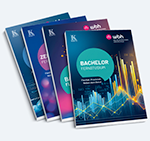
Tip: At many institutions, you can request prospects and information materials and in some cases download them immediately. The brochures contain all the information on study content, costs, financing and funding opportunities.
The FOM University of Applied Sciences is one of the largest private universities of applied sciences alongside the Fresenius University of Applied Sciences and the IU and is based in Essen/North Rhine-Westphalia. FOM was founded in 1993. 53836 students were enrolled at FOM in the winter semester 2021/2022.
FOM operates more than 30 university centres in Germany, including one in Stuttgart.
FOM's degree programmes are aimed at working professionals. Through various flexible time models, the classroom lectures take place parallel to a company job or training.
The International School of Management (ISM) is a private, state-recognised university with its headquarters in Dortmund and other locations throughout Germany, including here in Stuttgart. It was founded in 1990 and offers degree programmes in business and management that can be completed in both German and English.
ISM places great value on personal support, practice-oriented learning and the teaching of soft skills. With close contacts to the business community, numerous own research institutes and an extensive international network, ISM students should be prepared in the best possible way for a career in the global job market.
The Merz Akademie - University for Design, Art and Media was founded in 1918, has been state-recognised since 1985 and is based in Stuttgart. The university has a small student body of around 200 and offers degree programmes in design, art and media.
The focus of teaching is on the conceptual and creative application of new media technologies. The course content is prepared in a practical and interdisciplinary manner to prepare students for the demands of the professional world.
Particularly noteworthy is the university's individual support concept, which enables intensive cooperation between students and teachers.
The Merz Akademie has its only location in Stuttgart and is housed in a former factory building that has been converted into a modern campus. The campus offers students a creative environment with modern equipment and technology, for example a 3D/VR studio.
The IB University of Health and Social Sciences a private university based in Berlin with further campuses in Hamburg, Cologne, Munich and Stuttgart. The university was founded in 2007 and today has about 800 students. The university offers Bachelor's and Master's degree programmes in the fields of therapy sciences, psychology and health education.
A special feature of the IB University is its adaptation to societal and health policy needs and the development of the curriculum together with clinics, doctors and professional associations as well as educational policy. The study programmes are aimed at both first-time students and experienced professionals and are available in full-time, dual or part-time formats.
The campus of the IB University of Applied Sciences in Stuttgart is centrally located and easily accessible. It offers students modern seminar rooms and laboratories as well as a library and a cafeteria. Through the connection to the international network of the IB University, students also have the opportunity to gain international experience and network abroad.
Steinbeis University is a private, state-recognised university of applied sciences based in Magdeburg (Berlin before 2022) and other locations, e.g. Stuttgart. It was founded in 1998 and is named after Ferdinand von Steinbeis, a pioneer of German trade and commerce in the 19th century.
The university currently has about 9,000 students enrolled in various faculties. The faculties are structured into the different departments of Business and Economics, Technology and Engineering and Leadership and Management. There are a variety of Bachelor's and Master's degree programmes, which have different emphases depending on the faculty and can be completed dual or part-time.
It is known for its close cooperation with business and research institutions. This is reflected in the practice-oriented education and the high quality of research projects and publications.
Stuttgart Free University is a private, anthroposophical university based in Stuttgart. It was founded in 1928 and today has about 300 students in the departments of Waldorf and eurythmy education.
Tip: At many institutions, you can request prospects and information materials and in some cases download them immediately. The brochures contain all the information on study content, costs, financing and funding opportunities.
A dual study programme is a special form of study with increasing popularity among students and employers. It combines theoretical study content at a university or university of cooperative education with practical experience in a company or organisation.
The organisation of dual study varies somewhat from university to university and from company to company, but as a rule, theoretical phases at the university alternate with practical phases in the company. Students have an employment contract and usually receive remuneration.
The advantages of a dual study programme include this combination of theory and practice as well as the connection to a company, which usually pays the tuition fees and provides study support. Thus, a dual study programme can make it easier to start a career and improve your chances on the labour market.
However, dual studies also require a high degree of flexibility and resilience, and it can be difficult to find the perfect combination depending on the industry, region and desired degree programme.
Stuttgart is an excellent location to look for a dual study programme because of its many universities and companies. Here are some examples of dual study programmes in Stuttgart:
The remuneration for a dual study programme in Stuttgart depends on various factors, such as the industry, the company and the degree programme. As a rule, however, dual students can expect to receive between 800 and 1,500 euros. However, this study support should also not be understood as a full salary.
State universities
These are the state universities in Stuttgart:
University of Stuttgart: The University of Stuttgart is a university with about 25,000 students and offers a wide range of subjects in the fields of engineering, natural sciences, humanities and social sciences. It was founded as early as 1829, but has only existed as a university since 1967 and is now divided into ten faculties and 150 institutes.
HFT Stuttgart: The HFT Stuttgart is an applied science university with around 4,000 students and offers degree programmes in architecture and design, civil engineering, building physics and economics, as well as surveying, computer science and mathematics.
Hochschule der Medien Stuttgart: The Hochschule der Medien Stuttgart is a university of applied sciences with about 5,400 students and offers degree programmes in media, computer science, advertising and design.
Baden-Wuerttemberg Cooperative State University (DHBW): The Baden-Württemberg Cooperative State University is a practice-oriented university with around 33,000 students at 12 locations and offers dual courses of study in the fields of business, technology, social work and health.
Staatliche Akademie der Bildenden Künste Stuttgart: The Staatliche Akademie der Bildenden Künste Stuttgart is one of the oldest and, with around 900 students, also one of the largest art colleges in Germany and offers courses in art, design and architecture.
Staatliche Hochschule für Musik und Darstellende Kunst Stuttgart: The Staatliche Hochschule für Musik und Darstellende Kunst Stuttgart is a conservatoire and drama school with around 800 students and offers degree programmes in music, performing arts and music education. Founded in 1857, it is one of the oldest music colleges in Germany.
University of Hohenheim: The University of Hohenheim is a university with around 9,000 students and a focus on agricultural sciences, natural sciences, communication sciences and economics.
University of Education Ludwigsburg: The Ludwigsburg University of Education is a university of education with about 6,400 students and offers degree programmes in the fields of education, upbringing and teaching.
Hochschule für öffentliche Verwaltung und Finanzen Ludwigsburg: The Ludwigsburg Hochschule für öffentliche Verwaltung und Finanzen -university of applied sciences is a university of applied sciences with about 2,800 students and offers degree programmes in public administration, finance and law.
Esslingen University: Esslingen University is an applied science university with about 6,300 students and offers degree programmes in the fields of technology, economics, natural and social sciences.
Nuertingen-Geislingen University (HfWU): Nuertingen-Geislingen University is an applied science university with about 5,400 students. It offers degree programmes in business administration and international finance, as well as environment, design and therapy in Nuertingen. Geislingen is also home to the university's Faculty of Business and Law.
About the author Christian Wolf
Christian Wolf is the founder and editor-in-chief of privathochschulen.net and has been involved with the private university landscape in Germany for over 10 years. He also studies part-time, among other things, economics at the University of Erfurt and at the IU International University.
Comments & questions
or post as a guest
Gib deine E-Mail-Adresse an. Du bekommst dann immer bei Antworten auf deinen Kommentar eine Benachrichtigung. Benachrichtigungen kannst du jederzeit abbestellen. Es gilt unsere Datenschutzerklärung.
Loading comment... The comment will be refreshed after 00:00.
Tip
This provider offers free info materials to download or send. Would you like to be redirected to the provider's website? There you will find much more information about the course.

 DE
DE 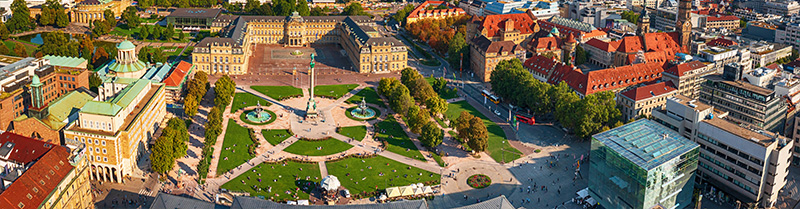
 Die
Die  The
The 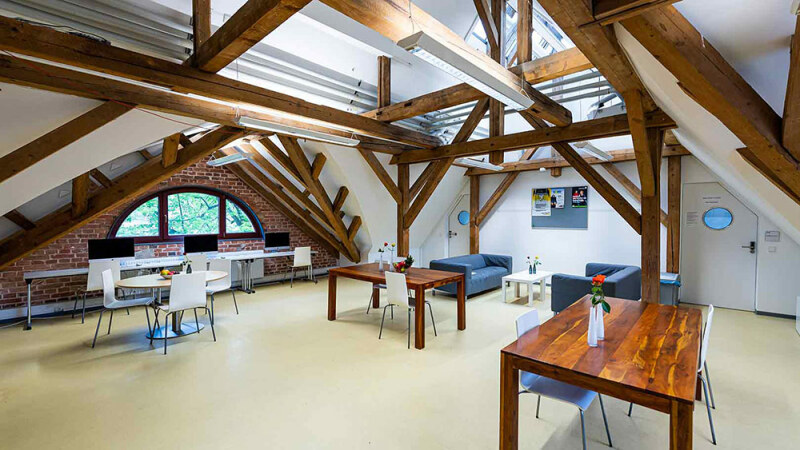
 The
The 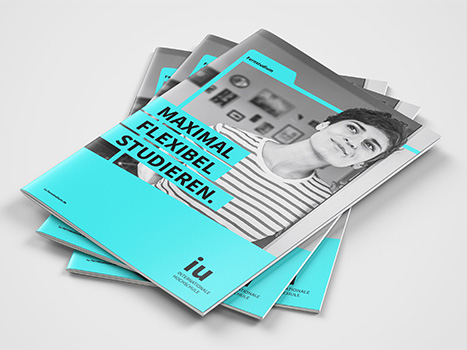

 The
The 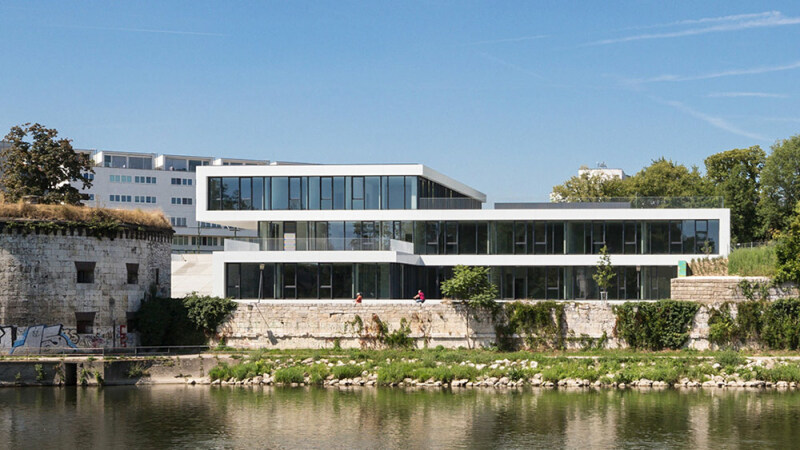
 The
The  The
The 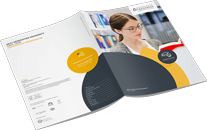
 The
The  The
The  The
The  The
The 




 This provider offers free info materials to download or send. Would you like to be redirected to the provider's website? There you will find much more information about the course.
Comments & questions
or post as a guest